

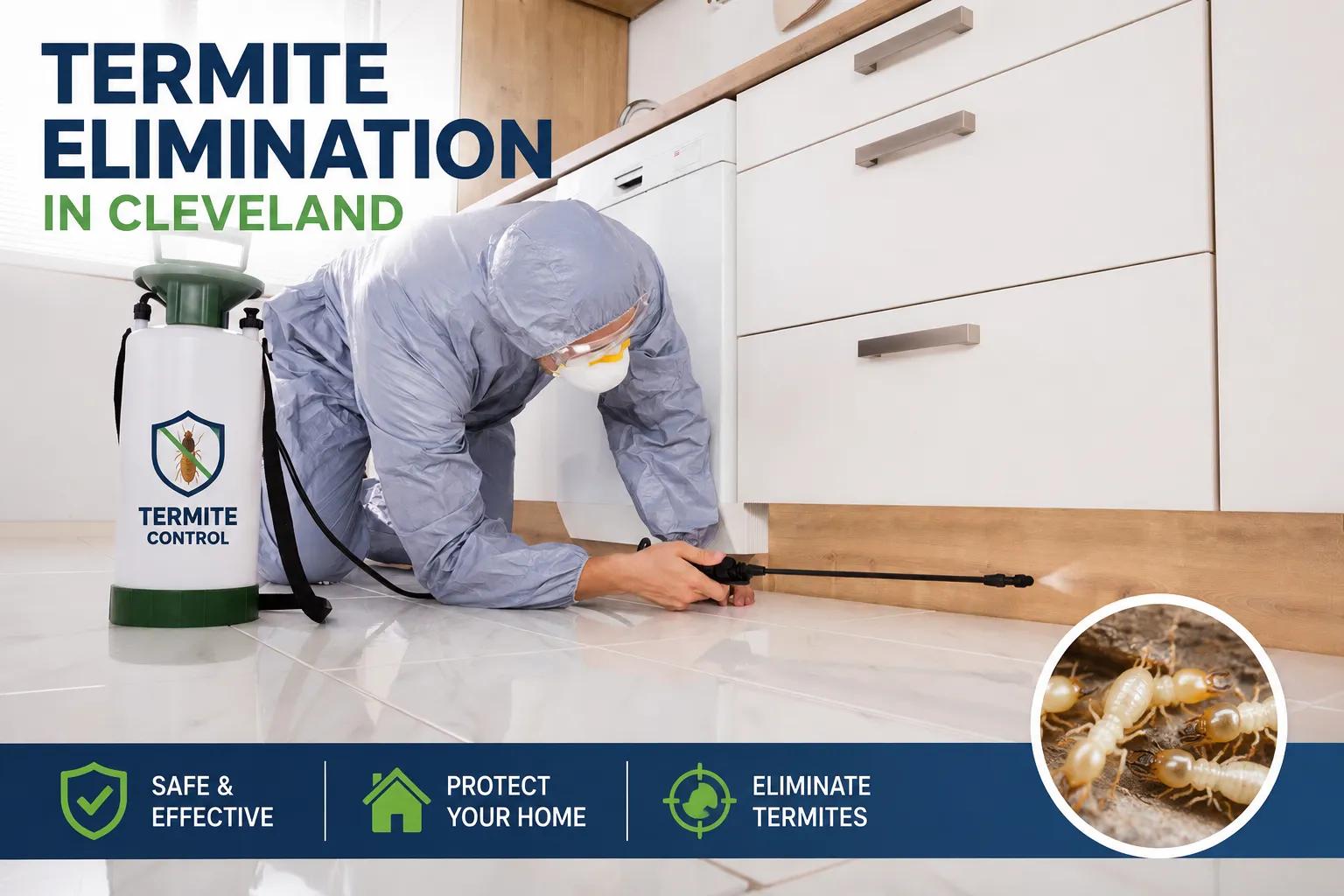
Termites cause more structural damage to buildings in the United States each year than floods and fires combined, according to the National Pest Management Association. Unlike those events, termite damage develops slowly and silently inside wood framing, floor joists, and support beams, where it is invisible until the structural integrity of the building is already compromised.
In Cleveland, where older wood frame construction is common and seasonal moisture conditions support termite activity, property owners face a genuine and measurable risk. Professional termite elimination in Cleveland is the process that identifies active colonies, treats them effectively, and puts monitoring systems in place to prevent reinfestation. This article explains how that process works and why it matters for both residential and commercial properties.
Why Termites Are a Serious Structural Threat
Most pest problems are primarily nuisances or health code concerns. Termites are different. They feed on cellulose, which is the organic material found in wood, and a mature colony can consume the equivalent of a foot of two-by-four framing lumber in a matter of months.
The structural consequences of an untreated termite infestation are not cosmetic. Damaged floor joists flex under load. Support beams lose load-bearing capacity. Subfloor panels weaken. In severe cases, structural repairs involve removing and replacing framing members that have been hollowed out from the inside.
What makes termites especially damaging is that the colony works from the interior of wood outward. The surface of a beam can appear intact while the interior is extensively tunneled. A property owner walking across a termite-damaged floor may notice nothing unusual until the wood gives way.
For commercial property owners, the financial consequences extend beyond repair costs. A building with documented termite damage faces complications during sales, refinancing, and insurance renewals. Lenders and insurers require termite inspection reports as part of due diligence, and active or past damage affects property valuations.
Termite Activity in Cleveland: What Drives the Risk
Cleveland's combination of climate conditions and older building stock creates specific conditions that support termite activity.
Moisture and Soil Conditions
The most common termite species affecting Ohio properties is the eastern subterranean termite. This species lives in underground colonies and travels to above-grade wood through mud tubes built along foundation walls and pier surfaces. Subterranean termites require consistent moisture to survive, and Cleveland's clay-heavy soils retain ground moisture through much of the year, providing the conditions the species needs.
Properties with drainage problems, basement water intrusion, or wood to soil contact at the foundation level face a higher infestation risk than properties where these conditions are managed.
Older Wood Frame Construction
Cleveland has a large inventory of residential and commercial buildings constructed between the 1880s and 1950s. These structures were built before treated lumber became standard in construction. Untreated wood in direct contact with the soil, or in crawl spaces with inadequate ventilation, is significantly more vulnerable to subterranean termite attack than modern construction.
Landscaping and Mulch Conditions
Wood mulch, landscaping timbers, and tree stumps in close proximity to a building's foundation create conditions that attract and sustain termite colonies. Many property owners are unaware that their landscaping choices can increase termite pressure against the building foundation.
How Professional Termite Elimination in Cleveland Works
Termite elimination is not a one-step process. An effective program combines inspection, treatment, and ongoing monitoring. Each stage plays a specific role in protecting the property.
Stage One: Inspection
A licensed exterminator in Cleveland conducts a thorough inspection of the property before any treatment decision is made. The inspection covers:
The full foundation perimeter, looking for mud tubes along concrete block, poured concrete, or brick foundations.
Crawl spaces and basement framing, where wood-to-soil contact and moisture conditions are assessed
Interior areas with known or suspected damage, including floor systems, window frames, and door frames in lower levels
Exterior wood elements such as deck framing, fence posts, and exterior trim that contact or approach the soil
The inspection report documents the location of any active termite evidence, the extent of visible damage, and the conditions contributing to infestation risk. This report forms the basis of the treatment plan.
Stage Two: Treatment
The two primary treatment methods used by a professional exterminator in Cleveland, Ohio, are liquid soil treatment and baiting systems. The choice between them depends on the construction type, the infestation location, and the property's specific conditions.
Liquid soil treatment: A liquid termiticide is applied to the soil around and beneath the foundation, creating a treated zone that kills termites passing through it and affects colony members that return to the soil. This method works well for properties with accessible foundation perimeters and active infestations concentrated in the soil-to-foundation zone.
Baiting systems: Termite bait stations are installed in the soil around the perimeter of the building at measured intervals. The bait contains a slow-acting active ingredient that workers carry back to the colony. The material spreads through the colony over time, reducing the population at its source. Baiting systems are used where liquid treatment is not accessible or as a primary treatment approach for ongoing colony elimination.
In some properties, both methods are used together to address different zones of the infestation.
Stage Three: Monitoring and Follow-Up
Termite elimination is not complete after a single treatment visit. Colonies can be large, and partially treated populations may regenerate if monitoring is not maintained. A professional termite program includes scheduled follow-up inspections to assess treatment effectiveness, check bait station activity, and identify any new evidence of termite movement.
Annual termite inspections are standard practice for properties in areas with documented termite pressure, and they provide the ongoing documentation that lenders and insurers require.
How Termite Programs Relate to Broader Pest Control Services
Termite elimination is one component of a broader property pest management program. Properties dealing with termite activity often also contend with other structural pests or rodent activity that shares the same entry zones and moisture conditions.
Rodent control in Cleveland is frequently needed alongside termite treatment in older properties, because the foundation gaps and crawl space conditions that allow termite access also allow rodent entry. A licensed exterminator who handles both termite elimination and rodent management can assess all of these risk factors during a single inspection and develop a coordinated treatment approach.
Similarly, a mouse exterminator working in a crawl space during a rodent service visit may identify termite mud tubes or damaged wood that the property owner was not aware of. These overlapping services are one reason that property owners benefit from working with a full-service pest control provider rather than a single-specialty operator.
What Property Owners Can Do to Reduce Termite Risk
Professional treatment addresses an active infestation. Structural and landscaping conditions that support termite activity require attention from the property owner to reduce the risk of reinfestation.
Practical steps that reduce termite pressure include:
Maintaining a gap between soil and wood elements at the foundation, including siding, trim boards, and deck framing
Removing wood debris, old stumps, and scrap lumber from areas adjacent to the building
Redirecting downspouts and grading the soil to move water away from the foundation
Improving crawl space ventilation to reduce moisture accumulation in wood framing
Replacing wood mulch near the foundation with inorganic ground cover materials such as gravel
None of these steps eliminates the need for professional treatment where an active colony is present, but they reduce the conditions that attract termite colonies to the property in the first place.
Selecting a Qualified Termite Control Provider
Not all pest control operators are licensed for termite work in Ohio. Termite treatment involves regulated pesticide products and application methods that require specific licensing beyond a general pest control certificate.
When selecting a provider, property owners should confirm:
Ohio Department of Agriculture pest control operator license, with termite-specific certification where required
Experience with the specific construction type and termite species present in the region.
Written inspection reports and treatment documentation
A monitoring program is included as part of the treatment service, not offered as a separate item.
References from commercial or residential clients with similar property types
Providers like G & G Exterminating offer both residential and commercial termite services across the Cleveland area and handle related services, including rodent control in Cleveland and mice exterminator work. Working with a provider that covers multiple pest categories means a single inspection can identify and address all of the structural pest risks a property faces, rather than requiring separate service calls for each issue.
Conclusion
Termite damage accumulates slowly and becomes visible only after significant structural harm has occurred. For property owners in Cleveland, where older construction and persistent soil moisture conditions support eastern subterranean termite activity, professional termite elimination in Cleveland is the most reliable way to detect, treat, and monitor against this risk.
A qualified exterminator in Cleveland, Ohio, conducts a complete inspection, applies the appropriate treatment method for the property's specific conditions, and maintains a monitoring program that catches renewed activity before it advances. Combined with practical site management steps by the property owner, a professional termite program protects the structural value of the building over the long term.
Properties that treat termite management as a routine part of building maintenance face far lower long-term repair costs than those that respond only after visible damage appears.